
Free-form progressive lenses: what to put on the order
How a free-form progressive differs from a conventional one, and the measurements that decide whether it works on the patient's face.
Mark ReidPublished 7 min read
A patient picks up new progressives, and two days later they’re back. The reading area feels narrow, or the sides swim when they turn their head. Sometimes the design is the cause.
Other times the lens was made from a guess: a split binocular PD, a fitting height taken off the old frame, no tracing. Free-form progressive lenses are only as exact as the order behind them.
What is a free-form progressive lens?
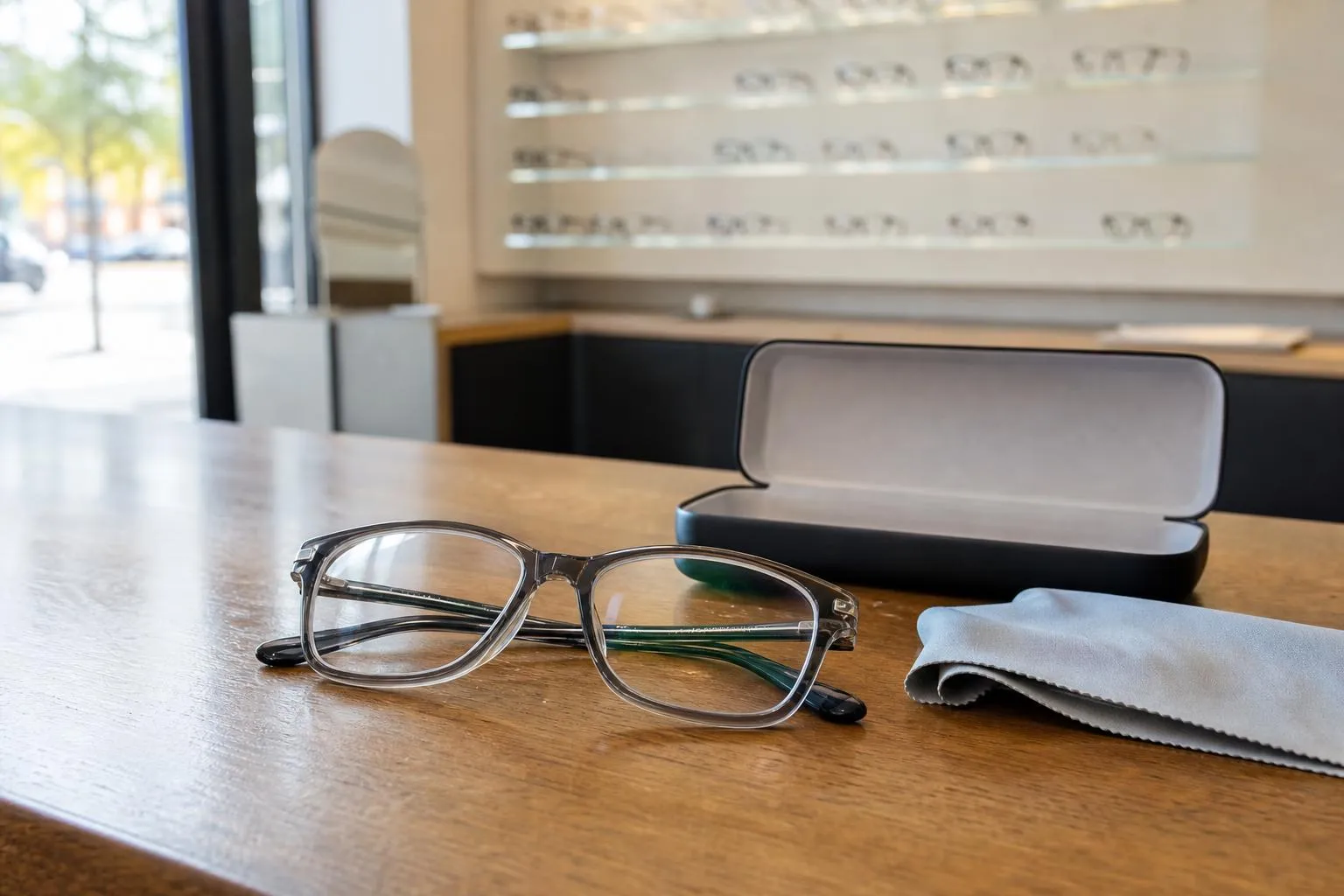
A free-form progressive lens has its progressive surface calculated for one patient’s prescription and cut on a digital generator. In a back-surface free-form lens, the lab starts from a blank with a simple front curve. It calculates the back surface point by point from the design and the full prescription, then generates and polishes it.
Other free-form types keep a moulded progressive front and cut a back surface optimised for the prescription, or split the design across both surfaces.
A conventional progressive has its progressive surface moulded on the front of a semi-finished blank at the factory. The lab surfaces only the back, with a spherical or toric curve that adds the patient’s sphere and cylinder.
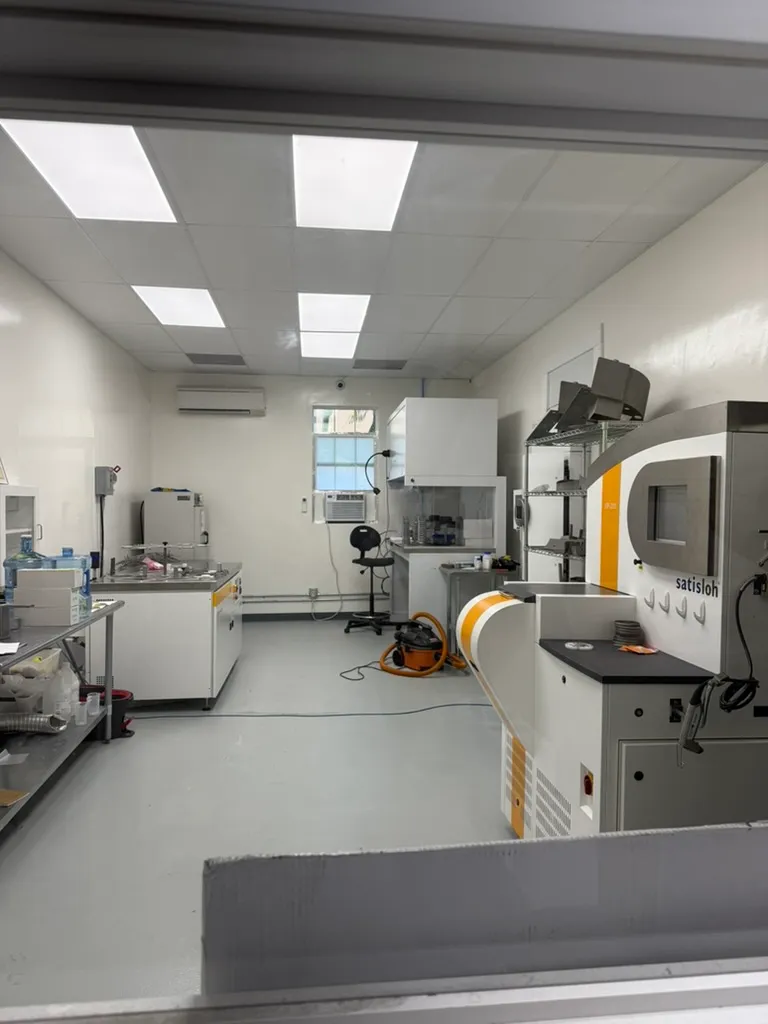
At ITFIT: our progressives use a free-form design engineered in Germany. We cut them on Satisloh digital surfacing equipment in our own lab, with everything in-house from surfacing to coating and edging.
Does a free-form progressive reduce blur at the sides?
A free-form progressive reduces part of the blur at the sides: the extra error the prescription adds when the eye looks through the lens at an angle. The rest comes with any progressive surface.
A surface whose power changes from top to bottom produces unwanted cylinder at its sides, which a design can move and soften but can’t remove. How much there is depends mostly on the add and the corridor length. A higher add, or the same add over a shorter corridor, means a steeper change in power and more cylinder at the sides.
A conventional front design covers a range of prescriptions, and its optics are worked out for one near the middle. A patient near the edge of the range gets extra blur toward the sides. A free-form surface is calculated for the real prescription, so it can reduce that off-axis error.
Colour fringing at the sides is a separate problem, caused by a low-Abbe material. The guide to Abbe value by lens material covers it.
How exact is a digitally surfaced lens?
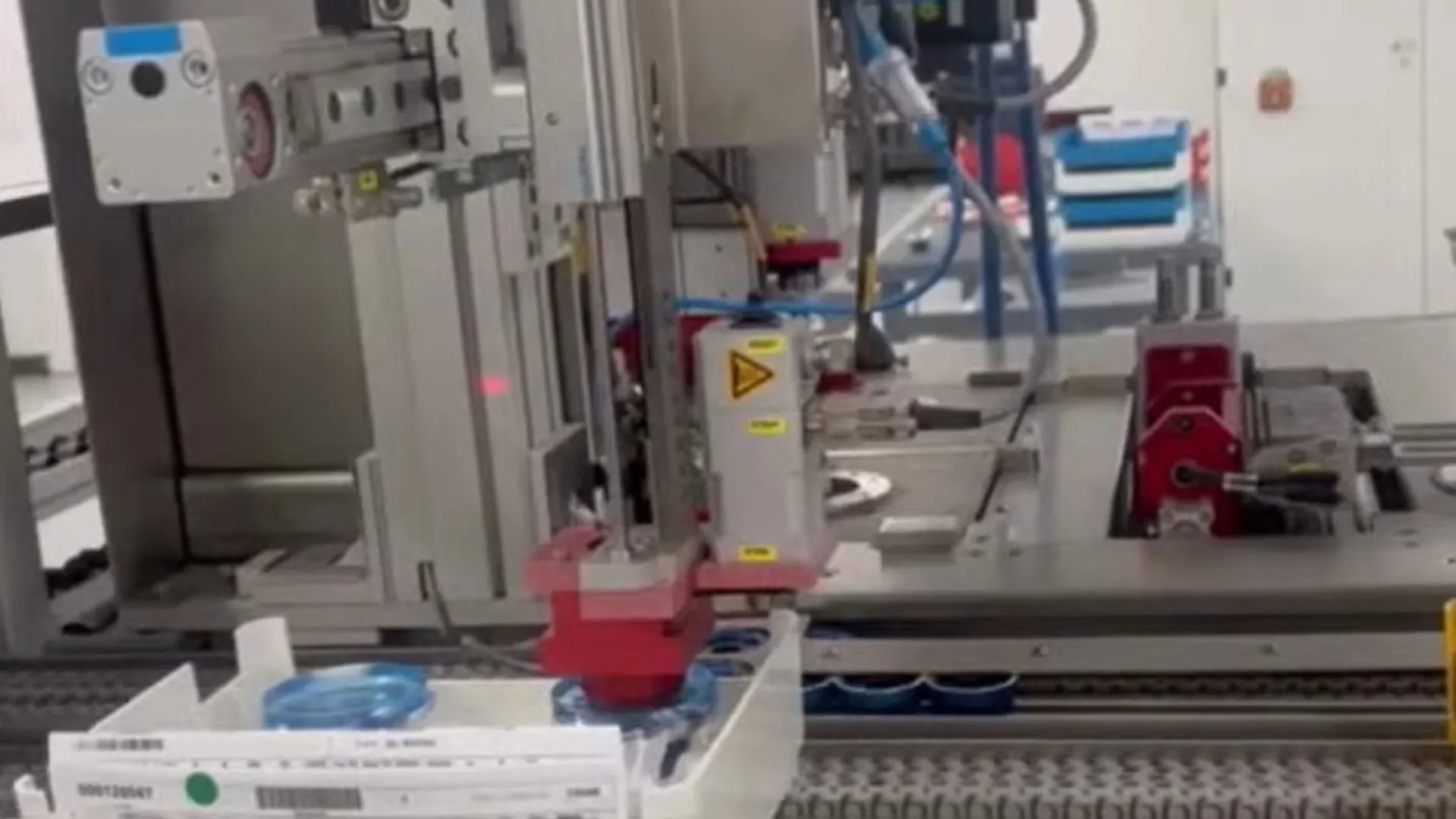
A digitally surfaced lens is cut to the curve its calculation asks for. Conventional surfacing finishes the back against a stock of fixed tools, so the curve you get is the nearest tool to the one you need.
At ITFIT: our digital surfacing works to 0.01 of a diopter, against 0.15 on traditional equipment. That precision only pays off when the order is right. If the fitting height is a guess, the lens is a guess.
What measurements does a free-form progressive order need?
Beyond the prescription, a free-form progressive order needs three things: monocular PDs, fitting heights and a frame tracing.
- Monocular PD. Measure each eye from the centre of the bridge to the centre of the pupil, at distance. Many faces are not symmetrical, and a split binocular PD can put one corridor off the pupil. The patient feels it as a narrow reading area on one side.
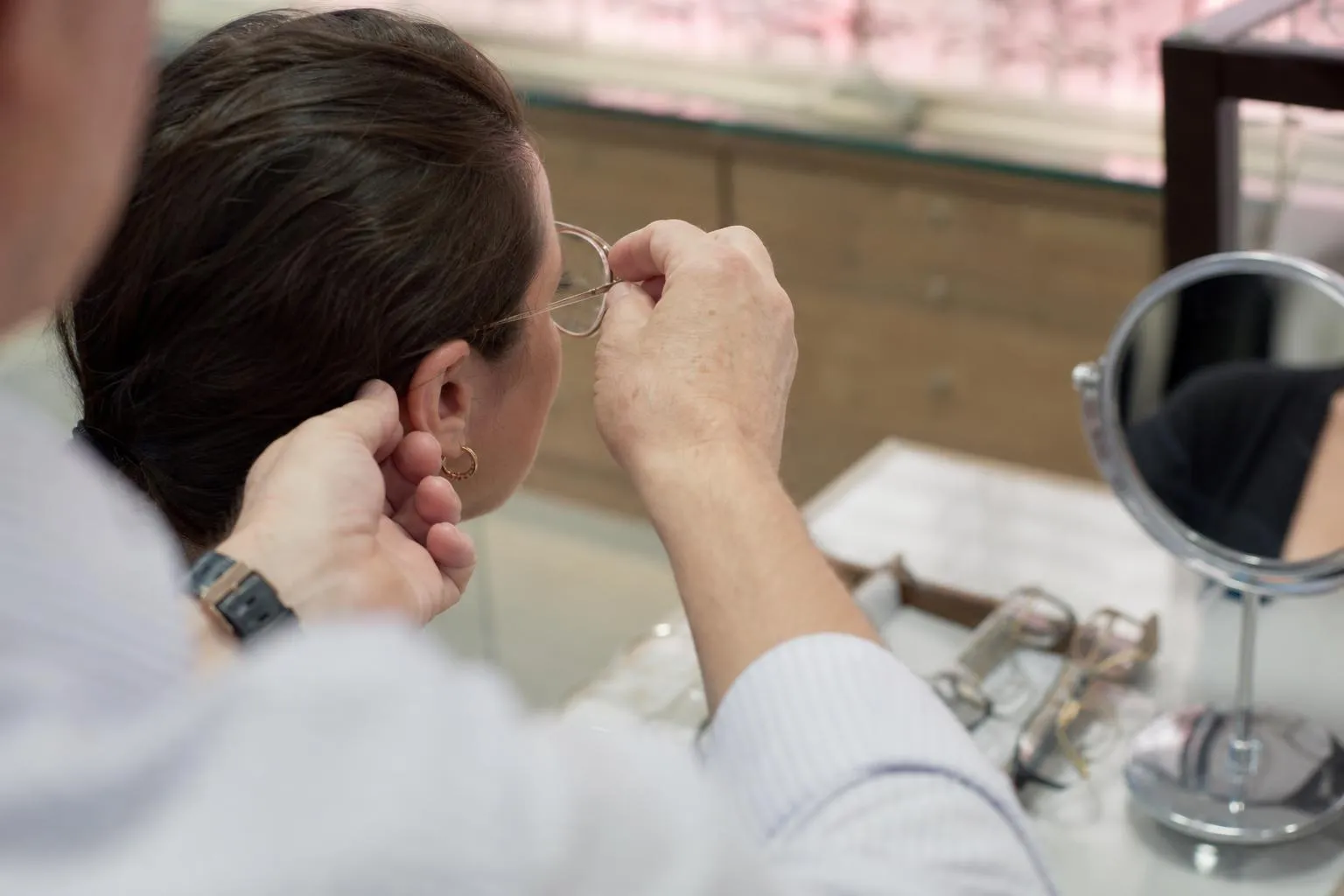
- Fitting height. Measure from the centre of the pupil down to the bottom of the lens opening, in the new frame, adjusted, with the head in its natural position. A height taken off the old frame, or before the new one is adjusted, moves the whole corridor.
- Frame tracing. Send a trace, or at least the A, B, ED and DBL. The lab uses the shape to check that the corridor and reading area fit inside the frame at your fitting height, and to make the lens no thicker than the shape needs.
The fitting height also decides which corridor lengths fit, since the corridor and the reading area below it must sit between the pupil and the bottom of the frame. Each design lists a minimum fitting height per corridor. Put a long corridor in a shallow frame and part of the reading area is cut away at edging.
So shallow frames take short corridors, at the cost of a steeper power change and more blur at the sides. A deeper frame allows a longer corridor and a gentler change. Many free-form designs offer more than one corridor, chosen from the fitting height and tracing on the order.
When should you send pantoscopic tilt, wrap and vertex?
Send them when the frame sits differently from an average fit: a wrapped sport frame, a strong tilt, or a frame far from or close to the eye.
Pantoscopic tilt is how far the lens tilts from vertical, bottom toward the cheek. Wrap, or face form, is how far the frame curves around the face. Vertex distance is the gap between the back of the lens and the front of the eye.
Tilting a lens adds sphere and cylinder the prescription didn’t ask for, and the effect grows with the lens power and the angle. Vertex matters most on strong prescriptions, where a few millimetres change the power the eye receives.
A design that uses these measurements compensates for them. It changes the powers on the lens so that, at this tilt, wrap and vertex, the eye gets the prescription as written. Without them, the calculation assumes a standard fit.
A compensated lens reads differently on the lensometer from the written Rx, because the lensometer measures it off the face. A lab making a compensated design sends the compensated values with the job, and those are the numbers to check the lens against.
Free-form or conventional progressive lenses: which should you order?
Order free-form when the prescription or the fit makes the lens harder to get right: high sphere or cylinder, a frame at an unusual angle, or a patient who struggled with a previous pair. A conventional lens can still work on a mid-range prescription in a standard frame, where its design sits close to the patient’s numbers.
| Free-form | Conventional | |
|---|---|---|
| How it is made | Calculated for this prescription, cut on a digital generator | Progressive front moulded at the factory |
| Optics tuned for | This patient’s prescription | The middle of the design’s range |
| Tilt, wrap and vertex | Compensated when the design uses them | A standard fit assumed |
| On the lensometer | The compensated values, if compensated | The written prescription |
At ITFIT: the progressives we make are free-form, digitally surfaced in our own lab and shipped in 2-3 business days. The design is on our lenses page. If a patient doesn’t adapt, we redo non-adapts.
A free-form design can only correct for the numbers it is given. Send monocular PDs, fitting heights and a tracing, plus tilt, wrap and vertex when the frame calls for them, and the lens is made for the patient who will wear it.
Not ordering from us yet? Sign up through VisionWeb and send your next progressive with all three.
Questions
Is free-form the same as digital surfacing?
Free-form describes a lens surface calculated point by point for one prescription. Digital surfacing is how it is made, on a computer-controlled generator. A free-form progressive needs digital surfacing, and single vision lenses can be digitally surfaced too.
Why does a progressive need a monocular PD?
The corridor has to sit in front of each pupil, and many faces are not symmetrical. A binocular PD split in half can put one corridor off centre.
Where is fitting height measured from?
From the centre of the pupil down to the bottom of the lens opening, in the adjusted frame, with the patient's head in its natural position.
Can a free-form design remove the blur at the sides of a progressive?
No. Any progressive surface has some unwanted cylinder beside the corridor. Free-form reduces the extra error the prescription itself adds when the eye looks through the lens at an angle.
Why doesn't a compensated lens read the written prescription on the lensometer?
A compensated design changes the powers on the lens so the eye gets the written prescription at the patient's tilt, wrap and vertex. The lensometer measures the lens off the face, so it reads the compensated values. Check the lens against those.
How precise is ITFIT's digital surfacing?
It works to 0.01 of a diopter, against 0.15 on traditional equipment.
What does ITFIT do when a patient can't adapt to a progressive?
We redo non-adapts.
How long does a progressive take at ITFIT?
Progressives ship in 2-3 business days. Delivery time on top of that depends on the shipping method you pick.