
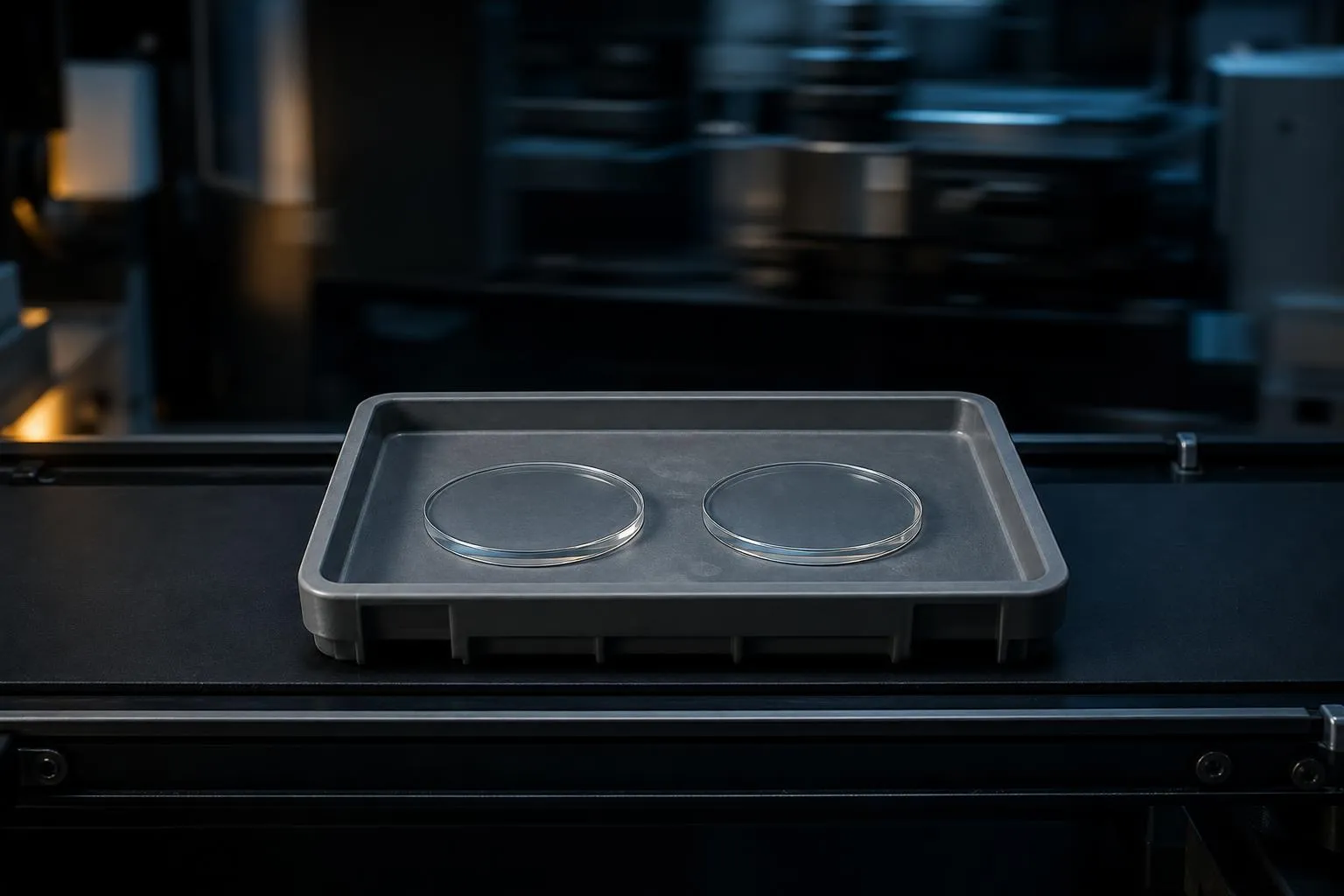
Mark ReidPublished 7 min read
A progressive comes back with a scratch, or it reads off at the near circle. The call to the lab starts with one question: where did it go wrong?
That’s easier to answer when you know the progressive lens manufacturing process. In our building it’s seven stations, from the order screen to the shipping box, with automated handling moving lenses along the surfacing line. Here is each one, what it does to the lens, and where the checks sit.
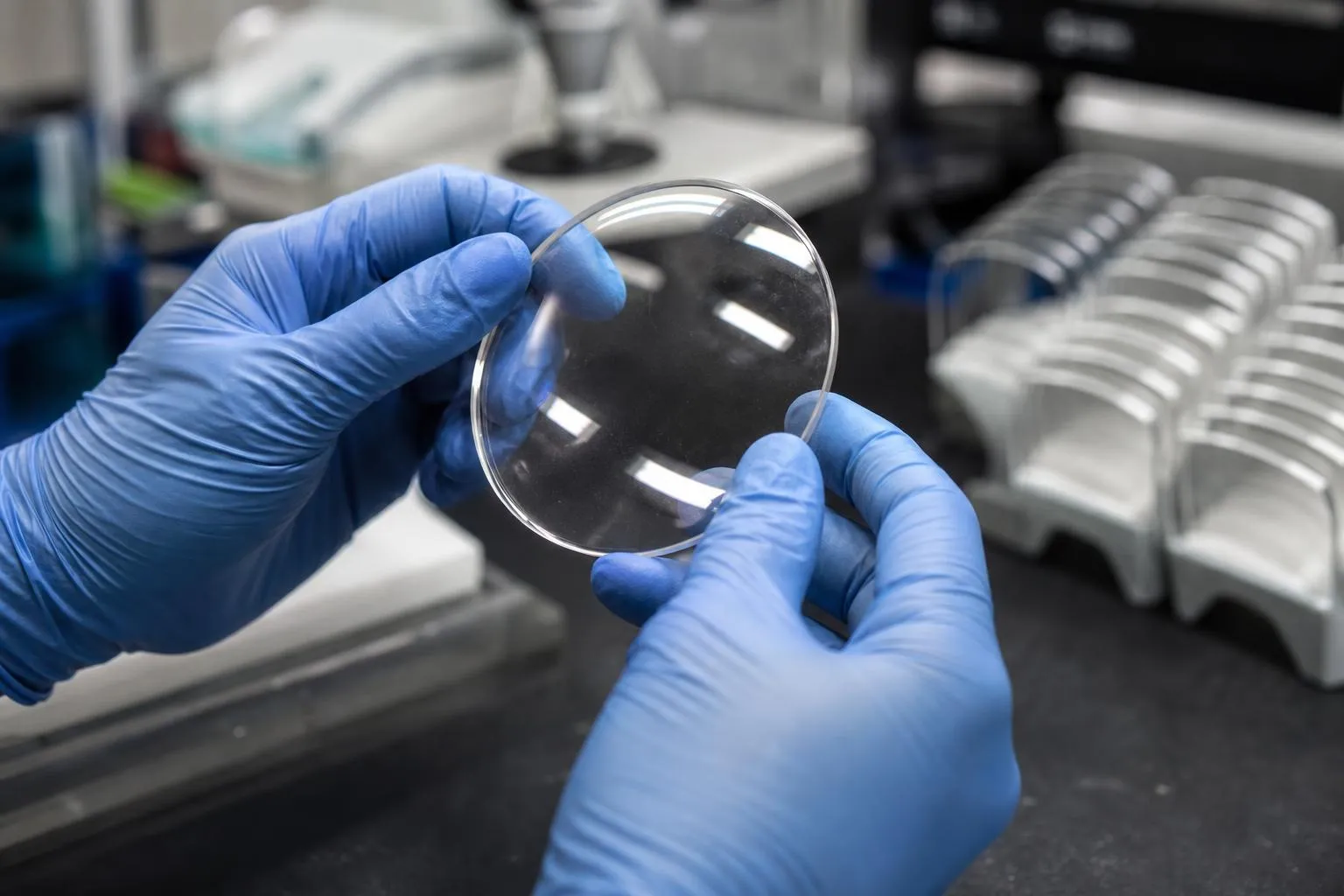
What are the steps in the progressive lens manufacturing process?
A progressive passes through seven stations: order in, material, digital surfacing, polishing, coating, edging and drilling, and inspection. Each one decides something about the finished lens, in this order:
- Order in: the prescription, measurements and frame shape the lens is calculated from.
- Material: the blank, which sets index, weight, Abbe value and front curve.
- Digital surfacing: power, cylinder, prism and the progressive design, cut into the back.
- Polishing: clarity, once the tool marks come off.
- Coating: reflections, scratch resistance and colour.
- Edging and drilling: where the fitting cross sits in the frame.
- Inspection: whether the job ships.
The order arrives with the prescription, monocular PDs, fitting heights and the frame’s shape. For a free-form progressive, software works out the surface to cut, point by point, from those numbers and the design. It also works out how thick the lens has to be to fill the frame’s shape at that prescription.
A wrong fitting height at this station is carried through all six that follow. How a free-form progressive differs from a conventional one is covered in free-form vs conventional progressives.
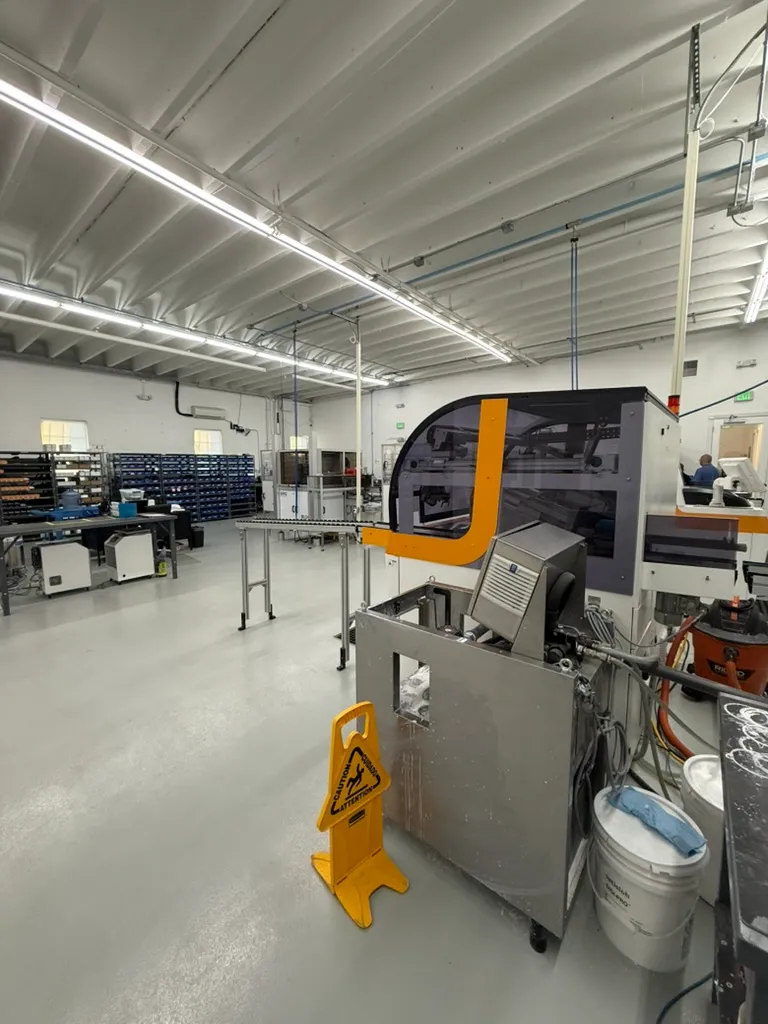
At ITFIT: orders come in through VisionWeb, Lens-Sync, phone or fax, and there’s no minimum: one job or a hundred. We run about 1,000 jobs a day through these seven stations, and nothing is sent out to a second lab along the way. Each station is on our home page, with a photo.
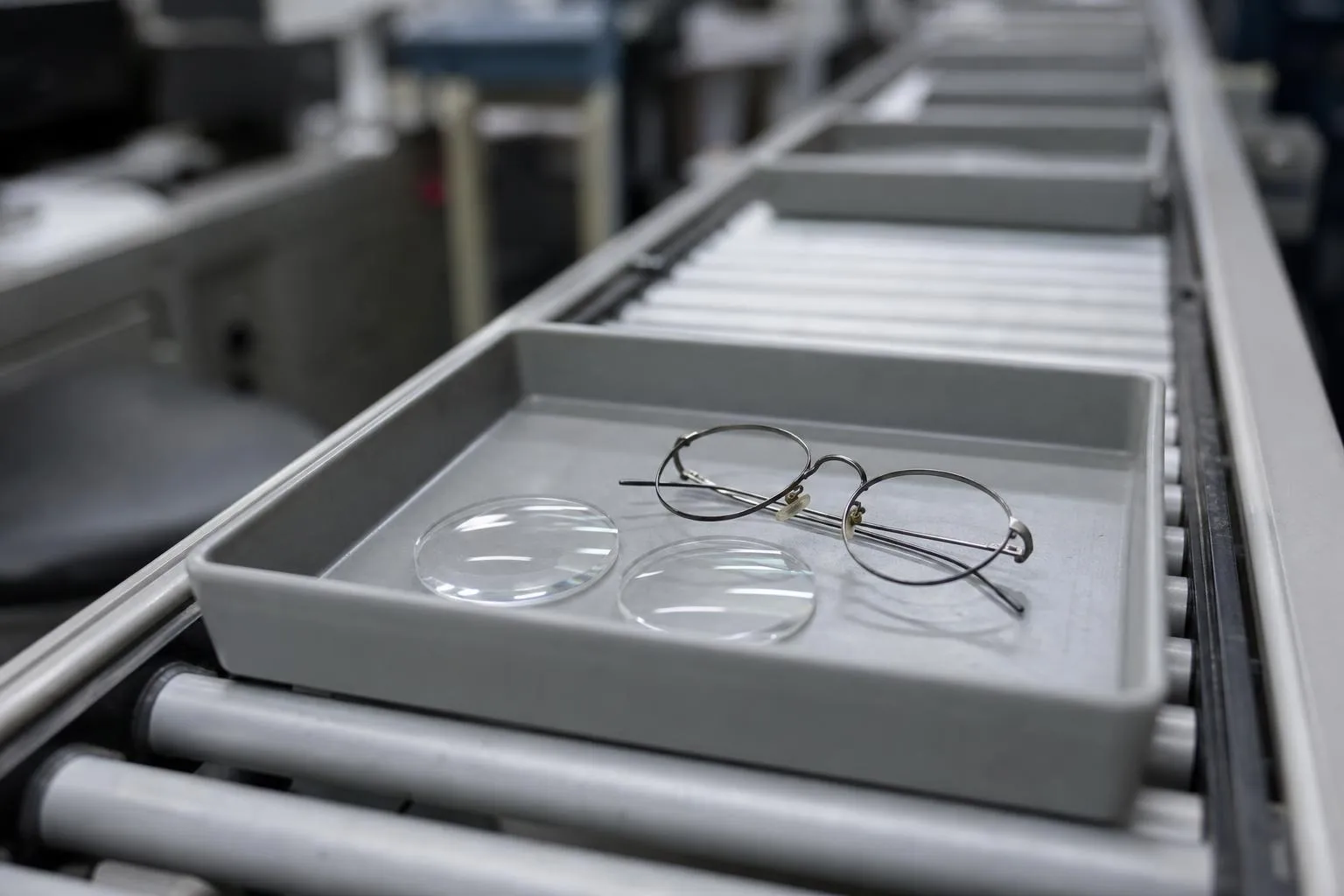
How is a progressive lens surfaced from a blank?
The lab picks a semi-finished blank, blocks it, cuts the calculated surface into its back on a free-form generator, then polishes off the tool marks. The blank arrives from its maker with the front surface finished and the back left thick, for the lab to cut.
The blank is chosen by material first, then by front curve. The material sets the refractive index, and with it how thin the lens can be, its weight and its Abbe value. The base curve is picked for the prescription: flatter curves for minus lenses, steeper ones for plus.
To surface it, the lens is blocked: its front is protected and it’s fixed to a holder the generator can grip. The generator spins the lens and moves a cutting tool in and out as it turns, so the curve can change from one point to the next. A fixed tool can only make a sphere or a toric curve.
That’s what lets it cut a progressive: plus power that increases down the corridor, the patient’s sphere and cylinder, and any prism, all in one surface. Prism is cut by tilting the back surface against the front. Polishing then takes off the fine tool marks, which scatter light, with a flexible pad that follows the surface so the curve keeps its shape.
At ITFIT: we stock CR-39, polycarbonate, 1.57 mid-index and 1.67 high-index, picked against the prescription and the frame. The lens material guide covers the trade-offs. Our Satisloh generators cut to 0.01 of a diopter, against 0.15 on traditional equipment.
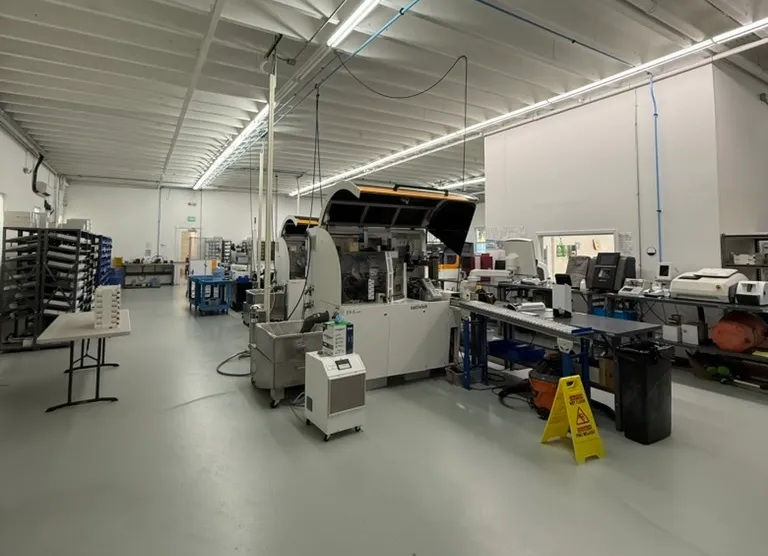
What coatings go on a progressive lens during manufacturing?
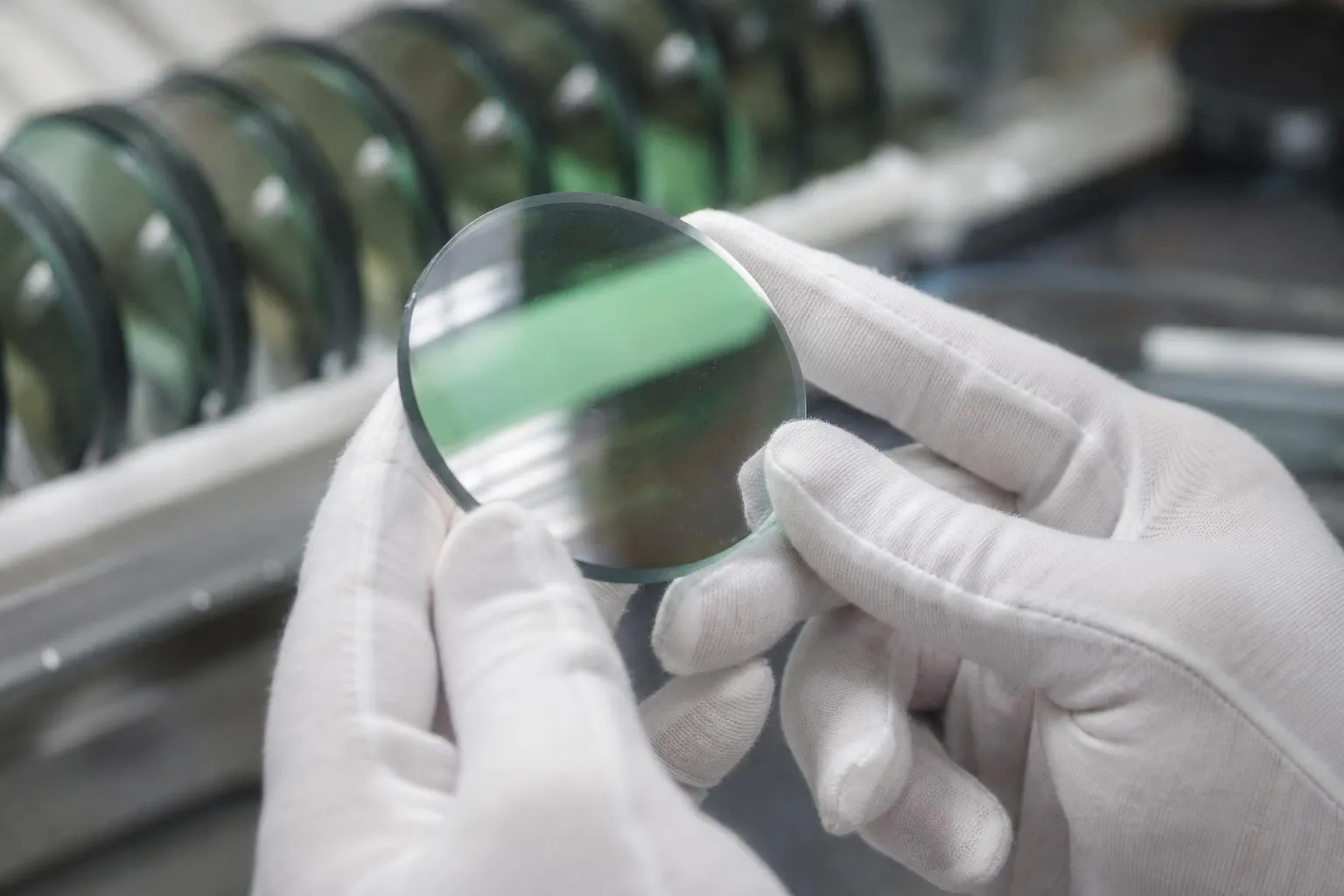
A progressive gets a scratch-resistant hard coat, then anti-reflective layers, plus a tint or mirror finish when the order asks for one. All of it goes on while the lens is still round, before it’s cut to the frame.
A flaw on the surface is cheapest to catch before this station, because a coating seals in whatever is under it. The hard coat goes on before the AR: it makes the surface harder and gives the thin AR layers a firm base. A tint goes in before the AR too, because the AR would block the dye.
AR goes on under vacuum, in thin layers of different materials laid one on another, each a fraction of a wavelength of light thick. Light reflected at one boundary cancels light reflected at the next. An uncoated CR-39 surface reflects about 4% of the light that hits it, and a 1.67 surface about 6%.
At ITFIT: AR goes on in our Satisloh SP-200. Our Green AR coating carries a one-year warranty against coating failure, and sunglass tints have a clean room of their own.
How is a progressive lens edged to the frame?
The edger cuts the round lens to the frame’s shape, placed so the fitting cross lands at the fitting height and monocular PD on the order. The lens is blocked again, lined up on its reference marks and cylinder axis, and cut to the tracing.
A full-rim frame gets a bevel on the lens edge that sits in the frame’s groove. A grooved rimless frame gets a groove cut into the lens edge for the cord. A drill mount gets holes where the frame’s hardware goes.
A perfect surface in a badly edged lens is still a bad pair of glasses. A lens edged too small sits loose in the frame, and one edged off its axis reads the wrong cylinder axis on the lensometer.
At ITFIT: we do all three in our own building. The same frame tracing that set the lens thickness at the order station guides the edger here.
How is a finished progressive lens checked before it ships?
The last check is on the bench, against the order, before the job ships. The lens is read at its reference points: distance power at the distance circle, prism at the prism reference point, the add at the near circle.
The lensometer guide shows where each one sits. Then the surface, the coating and the fit in the frame are checked by eye.
ANSI Z80.1, the American standard for prescription lenses, allows 0.16 of a diopter either way on a progressive’s distance sphere up to 8.00 diopters, and 0.13 on single vision up to 6.50.
At ITFIT: the finishing benches have lensometers for this check, and our digital surfacing works to 0.01 of a diopter. Single vision ships in 1-2 business days and progressives in 2-3. Our average return rate is 0.48%, fewer than 5 lenses back for every 1,000 we make.
Knowing the seven stations turns a vague complaint into a precise question for your lab. A scratch under the coating, a lens loose in the frame and a near circle that reads off each point to a different station.
To send us a progressive of your own, open an account through VisionWeb.
Questions
What is a semi-finished lens blank?
A blank with its front surface finished at the factory and its back left thick. The lab cuts the back to the prescription.
What does blocking a lens mean?
Fixing the lens to a holder so a machine can grip it. The front is protected first so the holder doesn't mark it. A lens is blocked for surfacing and again for edging.
Can a free-form generator cut prism?
Yes. Prism is cut by tilting the back surface against the front, as part of the same surface as the rest of the prescription.
Why does a lens need a hard coat under the AR?
The hard coat makes the surface harder and gives the thin AR layers a firm base. Polycarbonate needs one whatever else goes on it, because its surface is soft.
How much light does an uncoated lens reflect?
About 4% at each surface for CR-39 and about 6% for 1.67 high-index. The higher the index, the more the surface reflects.
Why does the lab need a frame tracing for a progressive?
Two stations use it. The calculation uses the shape to set how thick the lens has to be, and the edger uses it to cut the lens to fit.
Where is a lens checked at ITFIT?
On the bench, against the order, before the job ships. The finishing benches have lensometers for it.