
John AldersPublished 7 min read
A remake costs your practice a second fitting, a second trip for the patient and a few more days of waiting on the lab. Across a year those costs add up.
So it pays to know your own remake rate, and what an optical lab remake rate counts when a lab quotes one. Ours is a 0.48% average return rate. Here is where remakes come from, what sits behind our number, and what to count at your end.
What is an optical lab remake rate?
An optical lab remake rate is the share of lenses or pairs a lab has to make again, out of everything it makes in the same period. Divide the jobs remade by the jobs made, then multiply by 100.
Ask whether a rate is counted in lenses or in pairs, because the same month of work gives a different figure each way. Remake one lens in 100 pairs and that’s 1% counted in pairs, and 0.5% counted in lenses, because 100 pairs hold 200 lenses. Ask too whether it counts remakes, returns or both.
At ITFIT: our published figure is a return rate, counted in lenses. It averages 0.48%, fewer than 5 lenses back for every 1,000 we make.
What remake rate is normal for an optical practice?
Trade articles put practice remake rates between 5% and 15%, and one of them sets 5% or less as the mark of a well-run practice. Those figures, from 20/20 Magazine, Review of Optometric Business and Eyecare Business, count every cause of a remake: the lab, the measurements, the prescription and the patient.
Your own normal depends on the kind of work. A progressive order carries more measurements than a single vision order, so a practice that fits mostly progressives can expect more remakes than one that doesn’t.
Two things can push a practice’s rate up with nobody doing bad work: many first-time progressive wearers, and frames that don’t hold their adjustment.
What does a remake cost a practice?
20/20 Magazine counts the cost of a remake in materials, shipping, staff time and lost patients. In a practice that means a second pair of lenses, another delivery, someone re-ordering, re-checking and re-fitting the job, and a patient who may book next year’s exam somewhere else.
An Eyecare Business article makes the point that a lab’s “free” remakes are built into its prices. Whatever the lab, ask what its price covers.
At ITFIT: it’s just a flat rate. Prism, cylinder and specialty surfacing are part of the price of ITFIT Elite, with no line item added after the job is cut.
Who caused the remake: the lab, the measurements or the patient?
A remake comes from one of three places, and only one of them is a lab error.
| Cause | What it looks like | Who stops it happening again |
|---|---|---|
| The lab | Power or axis out of tolerance, unwanted prism, optical centres in the wrong place, a coating defect, a scratch, a lens edged too small | The lab |
| The measurements | A split binocular PD, a fitting height taken before the frame was adjusted, a wrong or missing frame trace | Whoever takes the measurements |
| The prescription or the patient | A prescription change, a non-adapt, a patient who picks another frame after the order | The prescriber, or a longer talk before the order |
The lensometer separates power, axis and prism errors from measurement errors. The first read as a lens that doesn’t match the order. The second read as a lens that matches the order and still sits wrong on the face.
Scratches, coating faults and a lens edged too small you see by eye. A lab error is the lab’s to put right, while a measurement error comes back on the next job unless someone changes how it’s taken. The measurements a free-form progressive order needs are the place to start.
Some non-adapts belong in the measurement row. A fitting height a few millimetres off looks like a patient who can’t get used to progressives, until someone re-measures.
At ITFIT: we redo non-adapts. Your log should still say why each one happened.
How does an optical lab keep its remake rate low?
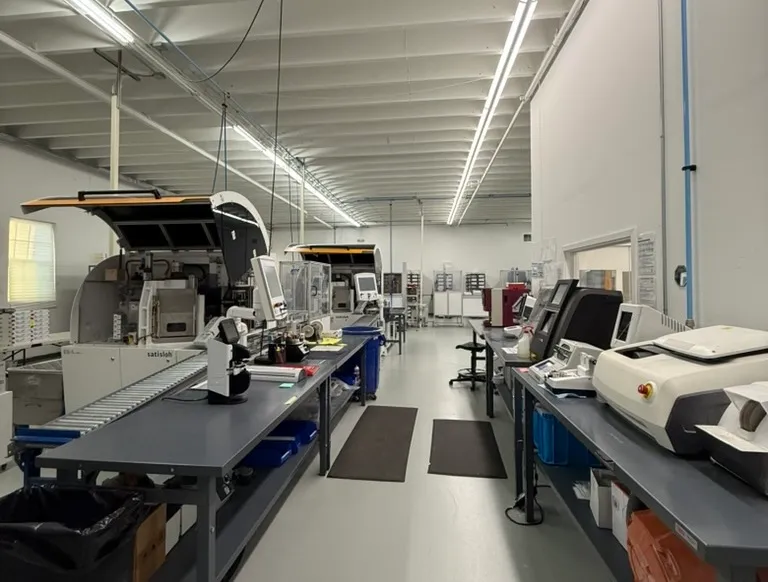
A lab keeps its remake rate low by giving each job fewer places to go wrong, and more chances for someone to catch a mistake before it ships. Precise surfacing, fewer trips between buildings and a check against the order all cut those chances.
At ITFIT: four things sit behind our 0.48% return rate.
The curve on the order is the curve we cut. Our digital surfacing holds 0.01 of a diopter, against 0.15 on traditional equipment, so the power on the lens starts close to the power on the order.
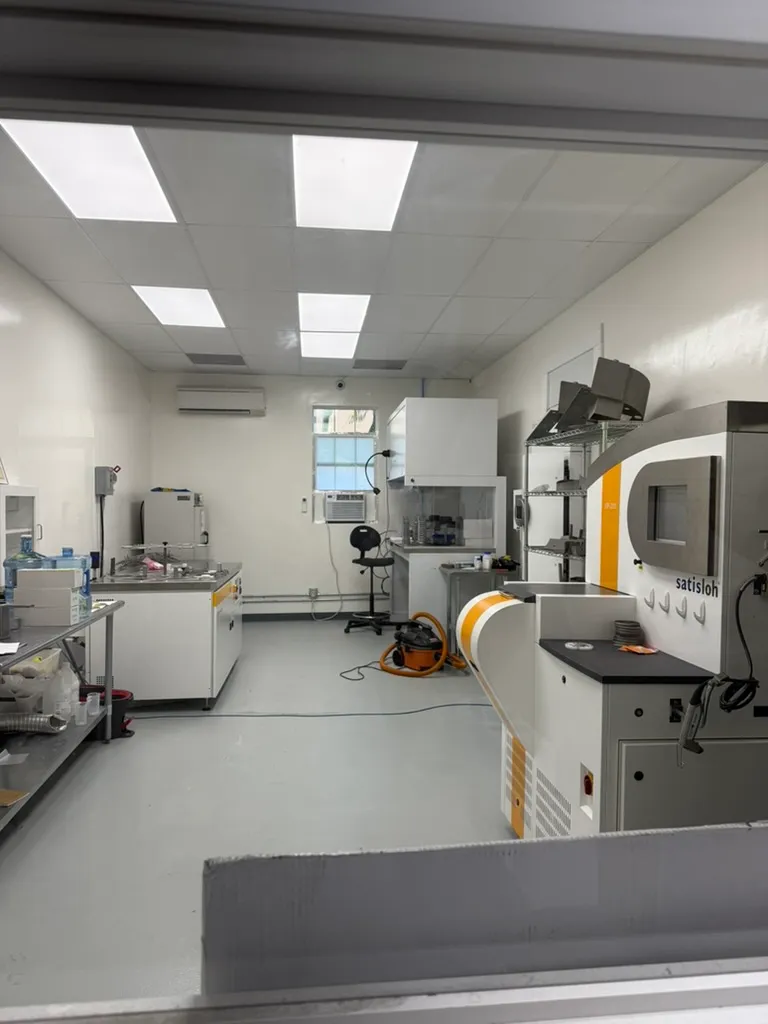
Nothing leaves the building. We do everything in-house: surfacing, coating, edging and drilling. A lens that travels to a second lab for its AR and back makes two more trips on which it can be scratched or mixed up.
A check before it ships. Each job is checked on the bench against the order before it goes out.
People who have seen it go wrong. Our team has 40 years in lens manufacturing and has set up and run labs in New York, Atlanta and Puerto Rico.
We don’t make careless mistakes. That’s a claim, and the 0.48% return rate is the number behind it.
How should a practice track its remake rate?
Track every remake in one log, with its cause, so you can see your practice’s rate and each lab’s side by side. For each one, write down:
- the date, the job number and the lab
- single vision or progressive, and the material
- the cause: the lab, the measurements, or the prescription and patient
- what was wrong, in a few words
- who took the measurements
- how many days the patient waited
Once a month, divide the remakes by the jobs sent, for the practice and for each lab. Count the same way your lab does, lenses or pairs, or the two numbers won’t compare.
Keep non-adapts and prescription changes in the log even though no lens was made wrong. They cost the same chair time as a lab error, and a pattern in them is still worth finding.
Then sort by cause. Two remakes from one person’s fitting heights, or from one frame style, point to a fix at your end. Two of the same lab error point to a phone call, with the job numbers in hand.
At ITFIT: say you send us 200 pairs a month. That’s 400 lenses, and at our 0.48% return rate about 2 of them would come back.
Measurement remakes follow you to any lab, so fix those first and judge the lab on what’s left. If the lab’s row in your log keeps growing after a call with the job numbers, start with what changes when your lab is independent.
To try us on your own jobs, open an account through VisionWeb. New accounts get their first two jobs free and their own account manager. Log those jobs like any others, and compare.
Questions
How do you work out a remake rate?
Divide the jobs remade in a period by the jobs made in the same period, then multiply by 100. Count lenses or pairs, and keep to the one you picked.
Is ITFIT's 0.48% return rate counted in lenses or in pairs?
In lenses. Our average return rate is 0.48%, fewer than 5 lenses back for every 1,000 we make.
Does a measurement error count against the lab?
No. A lens made correctly to a wrong fitting height or PD matches the order. It still costs you a remake, so log it under measurements and change how that measurement is taken.
Should non-adapts go in the remake log?
Yes, with their own cause. Some turn into measurement remakes once someone re-measures the fitting height or PD in the adjusted frame.
Why can progressives be remade more often than single vision?
A progressive order carries more that can be off. Monocular PDs, fitting heights and a frame trace come on top of the prescription, and the patient has to adapt to the lens.
Does sending a job out for AR add remake risk?
It adds handling. A lens that goes to a second lab to be coated makes two more trips on which it can be scratched or mixed up. At ITFIT the AR goes on in the same building that cut the lens.
How often should a practice review its remake rate?
Once a month is often enough to see a pattern. Work out the rate for the practice and for each lab, then sort the remakes by cause.